
ChatGPT ads for businesses are no longer a rumor — they’re officially live. On March 2, 2026, OpenAI launched its advertising pilot inside ChatGPT, and it’s already being called the biggest shift in digital advertising since Google Ads first put search results up for sale. If you’re a business owner spending money on digital marketing, this changes the game — and you need to understand how.
Here’s what happened, what it means for your business, and what you should do about it right now.
ChatGPT Ads for Businesses Are Officially Here
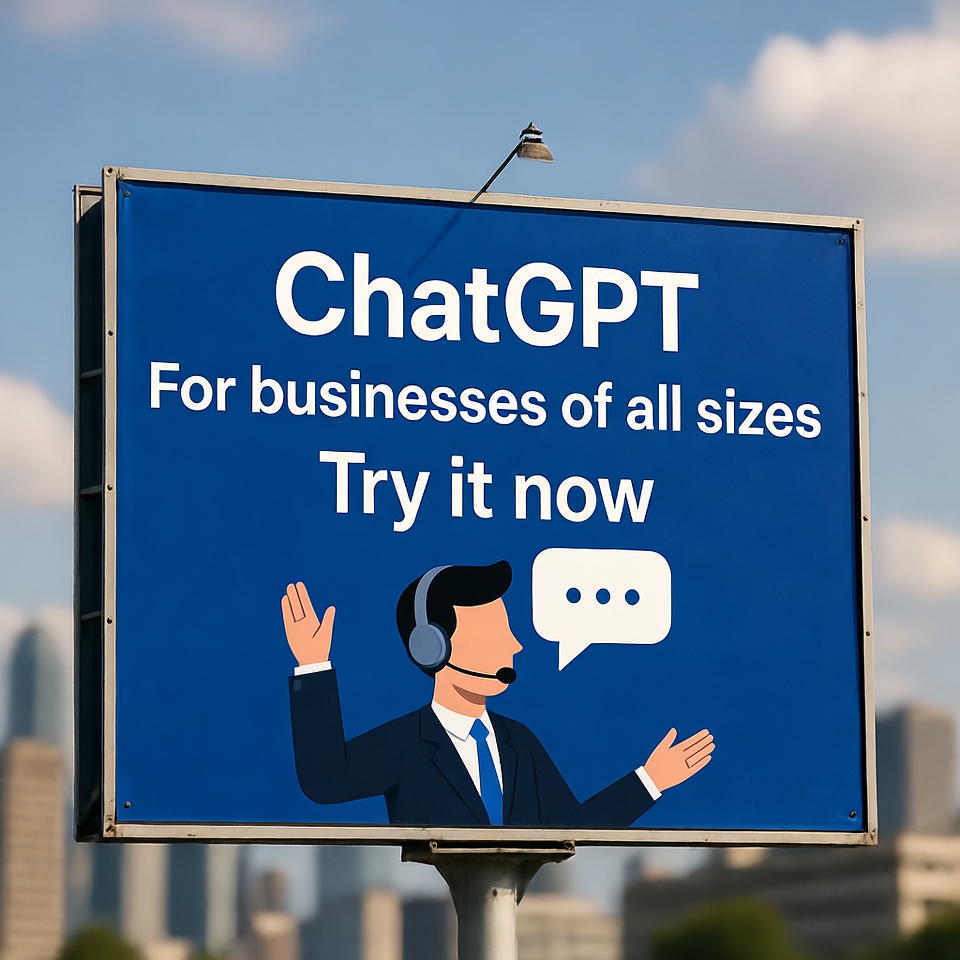 OpenAI has partnered with Criteo, one of the world’s largest advertising technology platforms, to bring sponsored ads into ChatGPT’s Free and Go tiers in the United States. Criteo is the first ad-tech company to integrate with OpenAI’s advertising system, instantly connecting more than 17,000 advertisers to ChatGPT’s massive user base. Major agencies including Dentsu, Omnicom, and WPP have already invested in the pilot on behalf of their clients.
This isn’t a banner ad sitting in the corner of a page. These are contextual, native-style ads that appear directly within the conversation — right alongside the answers ChatGPT gives users. The ads are clearly labeled as sponsored and don’t influence ChatGPT’s actual responses, but they show up exactly where users are making decisions. For businesses, that’s an incredibly powerful placement.
Why This Matters More Than You Think
The timing of ChatGPT ads for businesses isn’t random. Hundreds of millions of people now use ChatGPT for everything from product research to service recommendations to comparing options before making a purchase. According to Adweek’s reporting on the launch, Criteo’s data shows that shoppers referred to a retailer’s website from a chatbot are 1.5 times more likely to convert compared to other referral channels. That’s because people using AI tools aren’t casually scrolling — they’re actively looking for answers and solutions, which means they’re further down the buying funnel.
Think about what this means for your business. Right now, your potential customers are asking ChatGPT questions like “What’s the best spa near me?” or “Who should I hire for roof repair?” or “What’s the best way to grow my small business online?” If ads start appearing inside those conversations — and they will — the businesses that show up first will have an enormous advantage.
How ChatGPT Ads Compare to Google Ads
For the past two decades, Google Ads has been the gold standard for capturing high-intent search traffic. You bid on keywords, your ad appears when someone searches, and you pay when they click. It’s straightforward and it works.
ChatGPT ads for businesses operate on a similar principle — showing ads to people with high intent — but in a fundamentally different environment. Instead of scanning a list of ten blue links, ChatGPT users are having a conversation. They’re asking follow-up questions, refining their search, and getting personalized answers. An ad that appears within that flow feels less like an interruption and more like a recommendation.
That said, this doesn’t mean you should abandon Google Ads. Google still dominates search with billions of daily queries, and for most local and service-based businesses, Google Ads remains the most reliable and scalable paid channel. But ChatGPT ads introduce a new front — and smart businesses will start paying attention now, before the competition catches up and costs rise.
What Small Businesses Should Do Right Now
ChatGPT ads for businesses are still in the pilot phase, which means access is currently limited to brands working through Criteo’s platform and select agency partners. Most small businesses won’t be buying ChatGPT ads tomorrow. But that doesn’t mean you shouldn’t be preparing.
Double down on your Google Ads strategy. Google Ads isn’t going anywhere. In fact, as new channels like ChatGPT ads emerge, having a strong foundation in search advertising becomes even more important. The businesses that already know how to convert high-intent traffic will be the ones best positioned to expand into new channels.
Make sure your website converts. Whether traffic comes from Google, ChatGPT, or anywhere else, it all lands on your website. If your site is slow, confusing, or missing clear calls to action, you’ll waste every dollar you spend on ads — no matter where they run.
Optimize your online presence everywhere. AI tools like ChatGPT pull information from across the web to form their recommendations. That means your Google Business Profile, reviews, website content, and social media presence all influence whether AI tools recommend your business. The stronger your digital footprint, the more likely you are to show up — with or without paid ads.
Stay informed and work with experts. The digital advertising landscape is shifting faster than it has in years. Between Google’s AI-powered changes, ChatGPT entering the ad market, and new privacy regulations, there’s a lot to keep up with. Working with an experienced digital marketing partner means you don’t have to navigate it alone.
The Advertising Landscape Just Changed — Are You Ready?
The launch of ChatGPT ads for businesses marks the beginning of a new era in digital advertising. For the first time, ads are being served inside AI-powered conversations — not search results, not social feeds, but the actual dialogue between a user and an AI assistant. That’s a fundamental shift in how businesses can reach potential customers.
The companies that pay attention now and start preparing their digital presence will have a massive head start. The ones that wait will be playing catch-up in an increasingly crowded and expensive market.
Want to make sure your business is ready for what’s coming? Universally Found has been a Google Partner for over 10 years, managing more than $5 million in ad spend. We help businesses build digital marketing strategies that perform today and adapt for tomorrow. Schedule your free audit and let’s make sure you’re ahead of the curve — not behind it.